Loving Someone vs. Being “In Love”: What’s the Real Difference?

Disclaimer: This post contains affiliate links. If you make a purchase through them, we may earn a small commission at no extra cost to you.
Almost every woman in a long-term relationship eventually asks herself a version of the same quiet, slightly terrifying question:
Do I still love him—or am I still in love with him?
And almost immediately, the guilt hits. Asking the question at all can feel like a betrayal, like an admission of a truth you aren’t sure you’re ready to face.
But I need you to take a deep breath and hear this: asking this question is not a sign that your relationship is broken. It is a sign that you are paying attention. It is a sign of emotional maturity.
If you are struggling to understand the difference between love and in love, you are not alone. This is one of the most profound—and most misunderstood—distinctions in human psychology. Gaining clarity on this single question has the power to either save a relationship you were about to walk away from, or give you the honest courage to realize something has genuinely run its course.
Let’s break down exactly what is happening in your brain, your heart, and your cosmic blueprint.
The Psychology of the Spark: What Does Being “In Love” Mean?
When you first fall for someone, your brain is, quite literally, intoxicated.
Neurologically speaking, the early stage of romantic love floods your system with dopamine, norepinephrine, and serotonin. You think about him constantly. Food tastes better. Every text message feels like an electric shock. This chemical rush is often the first thing people point to when trying to define the difference between love and in love.
Psychologists call this stage limerence—an involuntary, obsessive romantic attachment characterized by intrusive thinking, idealization of the other person, and a desperate need for reciprocation.
So, what does being in love mean in psychological terms? It means your nervous system is responding to novelty, mystery, and the thrill of the chase. It is beautiful. It is real. But here is the part nobody likes to say out loud: it is biologically temporary.
Research consistently shows that this neurochemical intensity typically lasts between 18 months and three years. After that, the brain literally cannot sustain the same level of chemical output. The buzz softens. And this is exactly the moment when most people panic, looking at their partner and thinking, “Where did the spark go?” They confuse the settling of neurochemical intensity with the loss of love itself.
If you’re still feeling unsure about where your connection stands, the most powerful thing you can do is shift the conversation. Instead of guessing, try asking him specific, psychologically-driven questions to reveal his true level of commitment. Here is a list of revealing relationship questions to ask a guy to uncover his real feelings.
The Deeper Architecture of “Loving Someone”
What comes after the initial high—when it actually survives—is something quieter, steadier, and in many ways, far more profound.
Loving someone, rather than just being in love with them, is characterized by:
- Genuine acceptance: Seeing their deepest flaws clearly and choosing them anyway.
- Invested care: Actively wanting their well-being, even when it costs you time or energy.
- Chosen presence: Showing up not because dopamine compels you to, but because you decide to.
- Secure attachment: Feeling grounded and safe, rather than constantly electrified and anxious.
- Shared identity: Your lives, values, and futures have become genuinely intertwined.
The cultural narrative we see in movies tells us that this quieter, deeper love is somehow a downgrade. But that is a lie that destroys perfectly good marriages. The transition from being “in love” to “loving someone” is not a loss. It is the moment the real love story actually begins.
The Spiritual Truth: Venus vs. The Moon
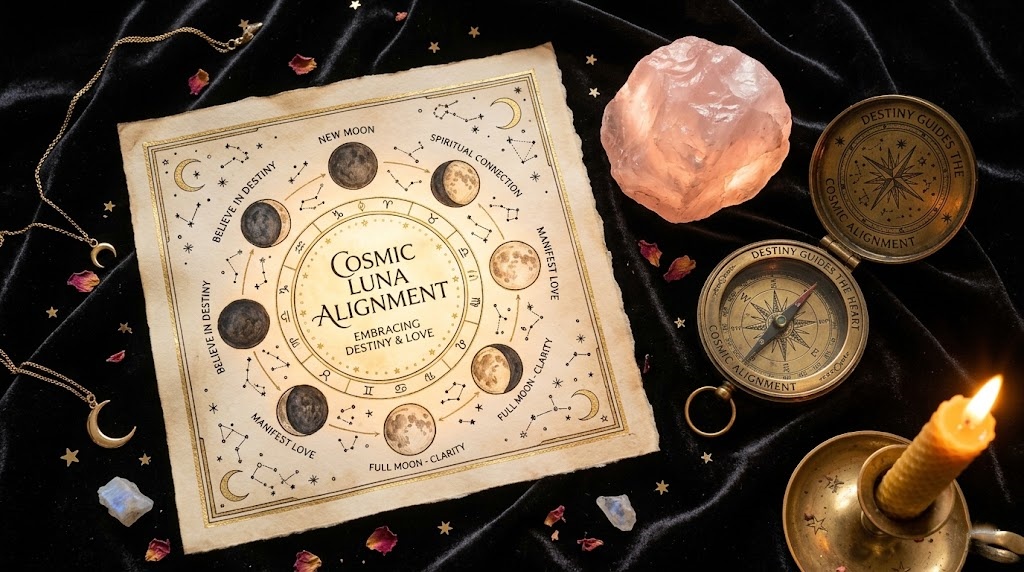
From a cosmic perspective, this distinction is absolutely fascinating.
Being in love is ruled by Venus—the planet of beauty, attraction, desire, and romantic idealization. Venus energy is magnetic and intoxicating. It is the energy of the breathless beginning.
Deep, enduring love, however, is governed by the Moon. The Moon rules our emotional security, our subconscious needs, our domestic life, and the deepest layers of how we are wired to give and receive care.
When two people’s Moon signs are compatible, something remarkable happens: they feel safe with each other. And safety, in the long arc of love, is the most underrated and essential ingredient of all.
Signs You Are Transitioning From “In Love” to “Love”
This transition is not a red flag. Watch for these beautiful signs that your relationship is maturing:
- The urgency has softened: You no longer feel anxious about the relationship’s security.
- Silence feels comfortable: You can exist in the same space without needing to perform or entertain.
- You see them clearly: The pedestal is gone, and you love the real, imperfect human standing in front of you.
- Your care is active: You do loving things even when you don’t particularly feel overwhelming passion.
Wait… What If The Shift Just Feels Like Emptiness?
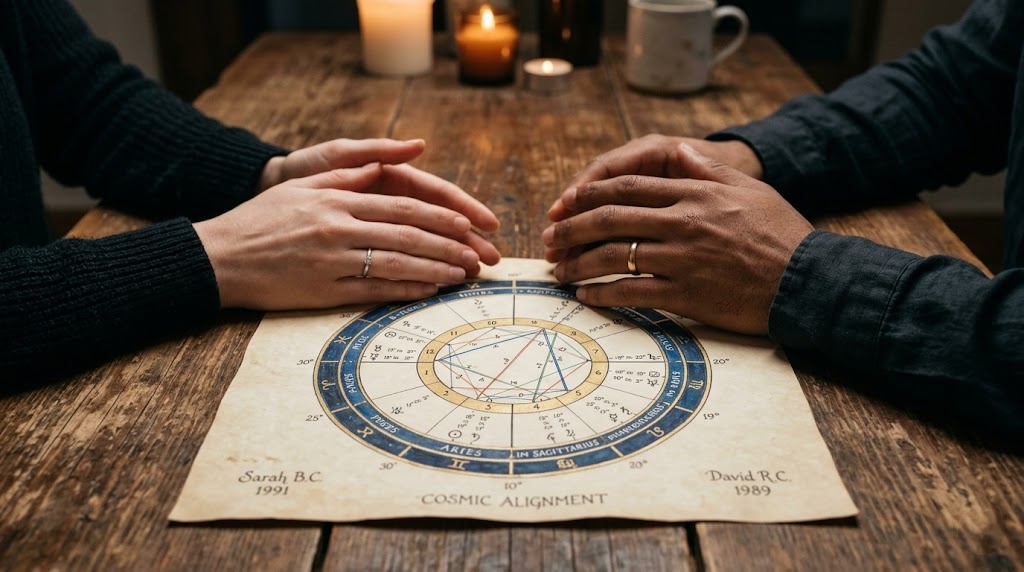
Here is where I want to be brutally honest with you.
Sometimes, what feels like a “natural transition” is actually a glaring signal that two people are not cosmically aligned for the long haul. Sometimes the Venus attraction was intensely real, but the Moon compatibility was never there.
And without Moon compatibility, the deeper love that should naturally grow in the quiet moments after the fireworks fade simply… doesn’t take root. It just feels empty.
If you are sitting there wondering whether your current partner has the energetic alignment to grow into a “forever love”—or whether what you had was beautiful but ultimately meant for a season—you need to look at your astrological compatibility.
Understanding how your Moon signs interact can bring a quality of clarity that no amount of anxious overthinking ever will. Before you make any major decisions about your relationship, I highly recommend running a free, highly personalized cosmic compatibility report.
It takes two minutes, requires nothing but your birth details, and the insights it reveals about your romantic destiny will give you absolute chills. Stop guessing, and let the universe show you the truth about your connection.
To summarize the difference between love and in love: one is an intense, chemical reaction, while the other is a chosen, enduring commitment.
Frequently Asked Questions (FAQ)
Is it possible to fall back “in love” with someone you’ve been with for years?
Yes! Novelty is the primary trigger for the neurochemical experience of being in love. This is why couples who deliberately introduce new shared experiences, travel to unknown places, or introduce new vulnerabilities into their relationship often report a genuine rekindling of that earlier intensity. It won’t be identical to the beginning, but the spark can absolutely be reignited.
Does passion always fade in long-term relationships?
The form of passion changes, but passion itself does not have to disappear. Early passion is driven by mystery and neurochemistry. Long-term passion is driven by deep knowing, chosen desire, and the erotic charge of genuine emotional intimacy. Many couples report their physical connection actually deepens over time as real trust replaces the performance of the early dating stage.
How do I know the difference between love and in love, or if I’m just going through a difficult season?
This is one of the hardest questions in relationship psychology. A difficult season—marked by stress, grief, or external challenges—can absolutely mimic the feeling of falling out of love. Give the relationship three to six months of genuine, intentional effort (like regular date nights and honest communication). If the warmth and care are still completely absent, that is meaningful information. If they return, you’ll know the love was always there, just waiting beneath the weight of a hard chapter.
What is the main difference between love vs in love?
The easiest way to understand the difference is that being in love is a temporary, adrenaline-fueled state of obsession and passion (the spark). Loving someone, however, is an active choice, a deep commitment, and a sustainable emotional bond that remains even when the initial dopamine fades.
How do you reignite the feeling of being “in love”?
It requires shifting the dynamic. Instead of forcing romance, you need to trigger specific psychological responses in your partner. For men, this often involves activating their ‘Hero Instinct’—making them feel essential and deeply desired, which naturally pulls them back into that “in love” frequency.