Why Are Tarot Readings So Accurate? The Real Explanation

Disclaimer: This post contains affiliate links. If you make a purchase through them, we may earn a small commission at no extra cost to you.
If you’ve ever had a tarot reading that felt uncomfortably precise — like the cards somehow knew something they shouldn’t — you’re not alone. It naturally makes people wonder: why are tarot readings so accurate? The honest answer isn’t one thing. It’s several, working together.
The honest answer isn’t one thing. It’s several, working together.
The Psychology Behind It
Start here, because it’s real and it matters.
Tarot works partly because of projection — the psychological process of seeing yourself in an image. Each tarot card is a rich visual symbol. When you look at The Moon and feel something shift, that’s not random. The image is triggering associations, memories, and feelings that already exist in you. The card didn’t put them there. It surfaced them.
This is sometimes dismissed as “just psychology” — as if that makes it less valid. But psychology is how human beings process reality. The fact that tarot engages psychological mechanisms doesn’t make the insight less real. It explains how the insight arrives.
A skilled reader uses this actively. They’re not just reciting card meanings — they’re watching how you respond to the image, what you notice first, what you avoid looking at. That responsiveness is part of what makes a reading feel accurate.
The Role of Intuition
Beyond psychology, there’s something harder to explain.
Experienced readers describe a process that goes beyond card meanings and beyond observation. A knowing that arrives before the logical explanation for it. Conclusions that turn out to be accurate in ways that don’t reduce cleanly to “she read my body language” or “I told her without realizing.”
Whether you explain this as intuition, spiritual sensitivity, or a form of pattern recognition that operates below conscious awareness — the effect is real and it’s reported consistently enough to take seriously. Some people have a genuine gift for reading. That’s not mysticism for mysticism’s sake. It’s an acknowledgment that human perception varies, and some people’s operates at a different level.
Why the Same Cards Hit Differently Every Time
One thing that surprises people: the same card can mean something completely different in two different readings — and both can be accurate.
That’s not inconsistency. That’s context.
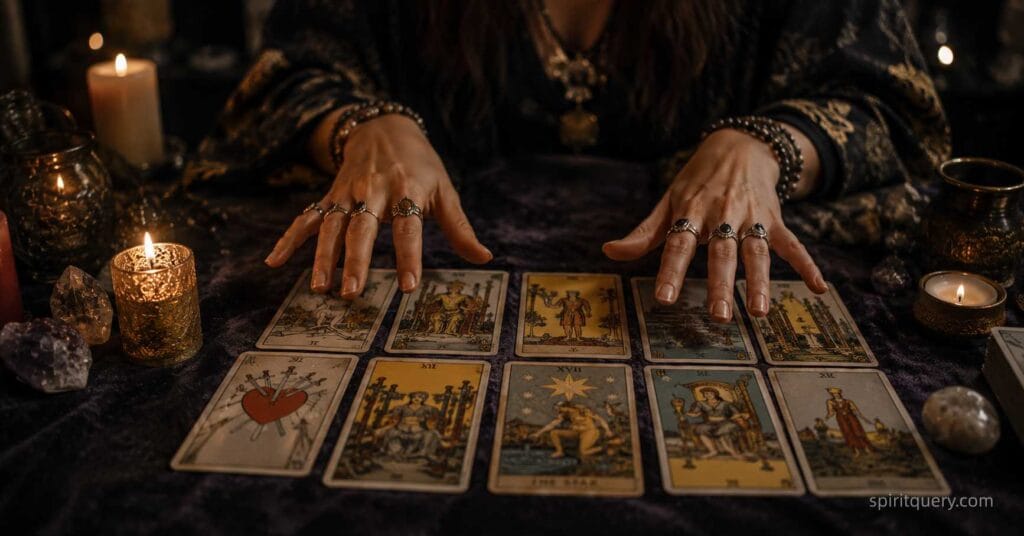
The Three of Swords in a reading about a relationship means something different than the Three of Swords in a reading about a career decision. Surrounded by Cups cards, it points to emotional heartbreak. Surrounded by Swords, it might indicate mental clarity after a painful decision. The card doesn’t change. The story around it does.
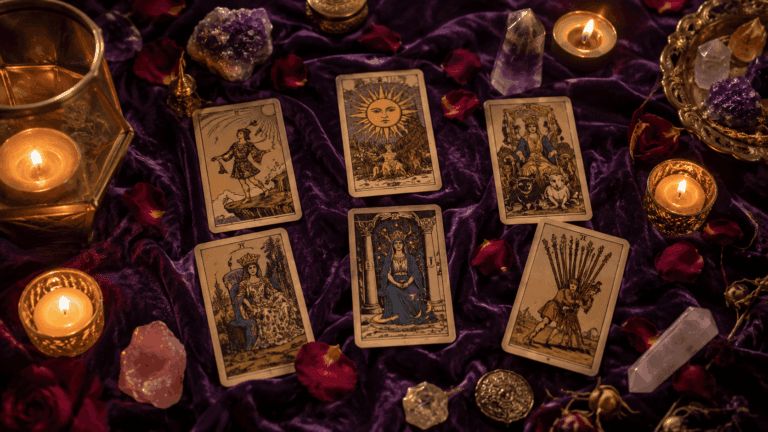
Good readers read the spread as a whole — the relationships between cards, the patterns, the balance of suits — rather than assigning each card a fixed definition and reading them in isolation. That holistic reading is what produces the “how did it know that?” moments. It’s not one card. It’s the configuration.
The Barnum Effect — And Why It’s Not the Whole Story
Skeptics point to the Barnum effect (also called the Forer effect): the tendency for people to accept vague, general statements as specifically accurate descriptions of themselves. Statements like “you sometimes doubt yourself but project confidence” or “you’ve experienced loss that changed you” feel personal — but they apply to nearly everyone.
It’s a fair point. Some tarot readings — and some readers — do rely on this. Vague enough to apply to anyone, specific enough to feel personal.
But it doesn’t explain everything. It doesn’t explain readings that surface specific situations the reader had no way of knowing. It doesn’t explain the readings that name something the querent hadn’t told anyone. It doesn’t explain why the same deck, with the same reader, produces profoundly accurate readings for some people and surface-level ones for others.
The Barnum effect is a real phenomenon. It’s also an incomplete explanation for what happens in a genuine reading.
What Makes a Reading Actually Accurate
Not all readings are equally accurate. The difference usually comes down to three things:
The reader’s skill and experience.
A reader with years of practice brings pattern recognition, intuitive development, and the ability to read context that a beginner can’t. This is true in every field, and tarot is no exception.
The querent’s openness.
Tarot is not a passive experience. A reading done with genuine engagement — real questions, honest reflection, willingness to hear what the cards are actually saying rather than what you want them to say — produces more than a reading done as a test or with arms crossed.
The specificity of the question.
“Will things be okay?” produces a vague reading. “What is the energy around my decision to leave this relationship?” gives the cards something to work with. Specific questions produce specific answers.
Why Some People Experience It As Uncanny
There’s a quality to certain readings that goes beyond insight and into something that feels like the cards knew. People describe it as a chill, a feeling of being seen, a moment where something private and unspoken was named out loud.
Part of this is the cumulative effect of a skilled reading — when every card in a spread maps accurately onto something real, the compounding accuracy feels like something beyond chance. Part of it may genuinely be beyond what psychology and skill fully account for. The people who’ve experienced it tend to hold both possibilities without needing to resolve them.
Tarot has been used for centuries across wildly different cultures, contexts, and belief systems. Whatever is happening in a real reading, something is happening. The question of what exactly is one worth staying curious about.
Frequently Asked Questions
Why are tarot readings so accurate?
Several things work together: the psychological process of projection (seeing yourself in symbolic imagery), the intuitive skill of an experienced reader, the holistic reading of a full spread rather than individual cards, and — in the view of many practitioners — a genuine spiritual or intuitive sensitivity that some readers develop over years of practice. No single explanation covers all of it.
“For a practical starting point, this beginner’s guide to reading tarot covers the basics step by step.” If you’re just getting started, learning how tarot cards work first makes a real difference in how you receive a reading.
Is tarot accuracy just the Barnum effect?
Partly, in some readings. Vague, universally applicable statements can feel personally accurate to almost anyone. But this doesn’t account for readings that surface specific situations, name things the reader couldn’t have known, or produce consistent accuracy across many different querents with specific questions. The Barnum effect is real, and it’s not the whole story.
Can anyone give an accurate tarot reading?
With practice, most people can develop a useful working knowledge of the cards. But genuine reading accuracy — the kind that produces the “how did it know that?” experience — requires years of practice, developed intuition, and a willingness to read context rather than just definitions.
Why does the same card mean different things in different readings?
Because tarot is contextual. A card’s meaning shifts depending on the question asked, the position in the spread, and the cards surrounding it. A skilled reader reads the spread as a whole story, not as individual card definitions added together.
Does the tarot reader need to be psychic?
Not in the traditional sense. Skilled tarot reading is a combination of knowledge, intuition, psychological observation, and experience. Some readers also have what might be called psychic sensitivity — but it’s not a prerequisite for accurate reading.
Are online tarot readings as accurate as in-person ones?
Yes, in most cases. Accuracy depends on the reader’s skill and the quality of engagement, not the medium. Many of the most experienced readers work online, and the distance doesn’t diminish the reading. What matters is the reader, the question, and the openness of the person asking.
Want to experience what an accurate reading actually feels like? Explore vetted tarot readers at spiritquery.com — advisors with real track records and verified reviews.
— Elara Vance, SpiritQuery.com